Technical Partner: IT leadership without a full-time IT director.
IT decisions get made on the vendor's word, with no one at your table to check them. Technical Partner is an independent expert on your side: I keep the overall picture under control, either on a regular rhythm or when a project or purchase calls for it.
Book a 15 min chat →Recognize these situations?
Everyday life without an IT director
One partner, two rhythms
No one is watching the whole picture from your side of the table: that's exactly why Technical Partner exists. Help comes in two rhythms, with the same independent person in both, someone who learns your environment. Someone at the table needs to ask the questions others avoid.
On a schedule: regular oversight
A recurring review of your IT environment: current state, opportunities, risks, and a prioritized action list. Written report and a 2-hour walkthrough, on-site or remote.
€800 + VAT per session. Monthly, quarterly, or semi-annually.
A light initial assessment is enough to start. An IT Health Check is a good starting point if the environment is unknown.
See what you get →When needed: an outside perspective
An independent set of eyes when a project or purchase calls for it: scope protection, budget oversight, vendor-work review, or a second opinion before a major decision.
Case-by-case pricing. A one-time review or monitoring for the project's duration.
Activates when the situation calls for it, quickly if it's urgent. No blind monthly contracts.
See an example →Regular oversight in practice
Not a generic newsletter, and not an "industry trends" slide deck. Every session is a written report filtered through your devices, software, and business, plus a personal walkthrough. This is what it looks like:
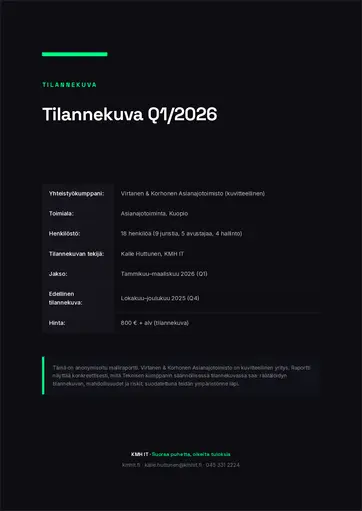
See a sample report
Status check, opportunities, risks and a prioritized action list. Filtered through an example company's environment.
Open sample report (PDF) →€150,000 in unbilled service
Browsing my then employer's price list on a hunch, I found that a secure email service had been in use for two years without anyone billing for it: roughly €150,000 worth of service. One afternoon of work. The finance department recovered the back fees including the previous year.
This is the kind of thing regular oversight catches.
An outside perspective in practice
I'm on your side of the table: I make sure the project succeeds, stays on budget, and genuinely serves the business. An example from a real project:
A project where the knowledge lived in people's heads
I jumped into an integration project where Confluence was a dumping ground, Jira didn't reflect reality, and documentation was missing. I built a documentation model for the project, cleaned up Jira, and raised the architecture risks to management before they materialized.
I also found a €15,000 scope gap in the RFQ: the integration platform's underlying data was such a mess that building automation on top of it made no sense. My client's customer paid for the platform cleanup separately, and the project avoided an expensive surprise.
The role is agreed case-by-case: a review, ongoing monitoring, or a second opinion.
Pricing
Regular oversight has a fixed price per session: €800 + VAT. Choose the rhythm that fits your situation.
All prices + VAT 25.5%. An outside perspective is priced case-by-case: a one-time review, monitoring for the project's duration, or a second opinion before a decision.
Why me?
I don't represent any vendor and I don't resell anything. I recommend what makes sense for you, whether that's a commercial product, an open-source solution, or no new solution at all.
Technical partnership only works if it's genuinely independent. My only interest is yours.
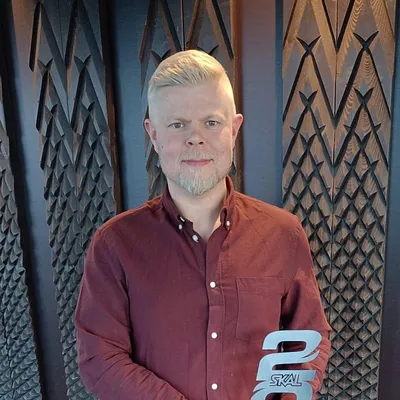
With Kalle, things get done. He tells you straight what the situation is, what should be done and why, without beating around the bush or using unnecessary jargon. A reliable professional whose passion for technology shows in every interaction.
Why me
Independent
No commissions, no reselling. I recommend what works, not what I get paid for.
Direct
I tell you straight what's wrong and what to do about it. No technical smokescreens.
Experienced
M365 admin for 500+ environments. Project experience across multiple industries and organization sizes.
Consistent
The same person review to review. I know your environment. You don't have to explain everything again.
FAQ
Doesn't our IT partner already handle this?
An IT partner reports on their own work. A Technical Partner looks at the whole picture independently, including things your partner won't tell you about. These roles complement each other.
Do I have to commit to a year?
No. You can start with a single review and see if it's worth it. No contract obligation.
Can the review or support be done remotely?
Yes. The walkthrough works on-site or remote. In Kuopio I'm happy to visit in person.
How quickly can we start?
Usually within a week of first contact. Regular oversight starts with a light initial assessment; an outside perspective is fitted to your project's schedule, quickly if the situation is urgent.
Let's talk.
Tell me about your situation. I respond within 24 hours.